阅读单选Studying abroadI am from Toronto, Canada and I moved to Madrid, Spain in September to pursue my master's degree(硕士学位). After almost two years of full-time work, I realized that I loved my field so much that I wanted to pursue higher education in the same field. Then I decided to pursue a Master's while having an experience abroad in Madrid. I chose Madrid because it is the business capital of Spain. They have amazing food, great wine, amazing culture and a beautiful language.I am studying abroad in Amsterdam in the Netherlands at the University of Amsterdam now. I have always wanted to study abroad because I wanted an experience studying in the Western atmosphere(气氛). I choose the Netherlands because their courses are taught in English and that is very convenient for me. It is also a very student-friendly country.Being an international student is a very interesting and useful experience. I got to know so many interesting students and discussed with them about different topics, not just about studies. What I wanted to experience most was the European lifestyle and cultures. Aside from the cultures, you also get to properly enjoy your time with others according to the real French lifestyle.As I got closer to graduating from high school, I began to consider spending a year or so travelling, either before or after studying at university. I was really excited to go outside of the UK. Studying abroad has given me the confidence to continue pursuing opportunities that lie outside of my comfort zone(舒适区).(1)Where does Jessica come from?A.Spain. B.Canada. C.The Netherlands. D.The UK.(2)Who studies in the Netherlands?A.Jessica. B.Dixie. C.Myriam. D.Oli.(3)What does Myriam think of studying abroad?A.Interesting. B.Challenging. C.Boring. D.Amazing.My Grandpa Forgets Who I Am A few days ago I visited my grandfather in hospital. He has Alzheimer's﹣a degenerative (退化的) disease that usually starts slowly and gets worse over time. I thought I was prepared to see him. I knew chances were slim that he'd actually recognize me. He didn't. As a matter of fact, he had no idea that he even had grandchildren. But he was excited that somebody came to visit him. I tried to explain to him who I was. But after he told me multiple times that he didn't have grandchildren, I gave up. And my heart broke into a million little pieces. I was tired of explaining things to him. So I just smiled.He smiled back.It's a genuine smile.Like a long time ago, when he'd take me by the hand and made this big world feel a little bit less scary for me. Now I have to take his hand. We sat in silence for a little while, before he told me to call my grandma.This was the first time I had tried so hard to hold back tears.My grandma died four years ago and he didn't remember. He thought she was stuck on her way to pick him up. My grandpa used to be a strong, hard﹣working man.He was the person you turned to when you needed your car fixed, your tires changed or something heavy to be carried. Sadly, that man left this world a long time ago, and left behind a man that is lost and scared. I want to help him. I want to make him feel better. I want to tell him about his old life, and how great it was. So I sat with him and I held his hand, and every once in a while I told him how good he looked and how much I liked the color of his shirt and how it brought out the blue in his eyes. I told him that my grandma was on her way whenever he asked about her, and I made sure the glass in his hand was always filled with water. I can't take away his pain. I can't help him remember. I can't make the disease go away. All I can do is hold on to the memories﹣hold on for both of us.(1)When the author first saw her grandpa in hospital,________.A. she gave up on himB. they were both excitedC. he didn't recognize herD. they talked about the past.(2)The author was close to tears because________.A. grandma died about four years agoB. grandpa needed to be taken care ofC. grandma didn't make it to the hospitalD. grandpa believed grandma was still alive.(3)Which of the following best describes the author?________A. Open﹣minded and cheerful.B. Considerate and patient.C. Warm﹣hearted and grateful.D. Strong﹣minded and generous..Learning Colour Words In the first few years of their lives, children brought up in English﹣speaking homes successfully master the use of hundreds of words, including those for objects, actions, emotions, and many other aspects of the physical world. However, when it comes to learning colour words, the same children perform very badly. If shown a blue cup and asked about its colour, typical two﹣year﹣olds seem as likely to come up with "red" as "blue". Cognitive (认知) scientists at Stanford University in California supposed that children's inability at colour﹣word learning may be directly linked to the way these words are used in English. They are used mostly in pre﹣nominal position (e.g. "blue cup"), in contrast to post﹣nominal position (e.g. "The cup is blue. "). The difficulty children have may simply come down to the challenge of having to make predictions from colour words to the objects they refer to, rather than from the objects to the colour words. To explore this idea further, the research team recruited (招募) 40 English children aged between 23 and 29 months and carried out a three﹣period experiment. It included a pre﹣test, followed by training in the use of colour words, and finally a post﹣test that was the same to the pre﹣test. The pre﹣ and post﹣ test materials contained six objects that were unfamiliar to the children. There were three examples of each object in each of three colours﹣red, yellow and blue.The objects were presented on trays (托盘), and in both tests, the children were asked to pick out objects in response to requests in which the colour word was either a pre﹣nominal ( "Which is the red one? ") or a post﹣nominal ( "Which one is red? "). In the training, the children were introduced to five sets of familiar items (balls, cups, crayons, glasses, and toy bears) in each of the three colours. Half the children were presented with the items one by one and heard them labeled with colour words used pre﹣nominally, while the other half were introduced to the same items described with a post﹣nominal colour word. After the training, the children repeated the selection task on the novel items in the post﹣test. Correct choices on items that were consistent (一致的)across the pre﹣and post﹣tests were used to measure children's colour knowledge. According to the assessment, children's performance was consistent when they were both trained and tested on post﹣nominal adjectives, and worst when trained on pre﹣nominal adjectives and tested on post﹣nominal adjectives. Comparing the pre﹣and post﹣test scores across each condition showed a significant decline in performance when children were both pre﹣and post﹣tested with questions that placed the colour words pre﹣nominally.(1)What is the purpose of Paragraph 2?________A. To present a phenomenon.B. To make a contrast.C. To give a possible explanation.D. To provide an example..(2)What can we learn about the experiment from the passage?________A. The children had to place the pre﹣and post﹣test objects onto coloured trays.B. The children were presented with the same objects in the pre﹣and post﹣tests.C. Pre﹣nominal questions were less used than post﹣nominal questions in the training.D. The researchers aimed to look for consistencies in children's knowledge of word order..(3)The outcome of the experiment shows that________.A. children are unable to accurately sort objects by colourB. children trained on pre﹣nominal adjectives perform wellC. children learn colour words rapidly in post﹣nominal positionD. children can make predictions from the objects to the colour words.Teens want structure in their lives, which means they want their lives well﹣planned. To begin building structure, teens need love and trust.They need to know their parents are there to give them needed love and support (支持).Teens want to be sure that nothing can prevent parents from shouldering their responsibility for them ﹣ not their growing maturity (成熟), misbehavior, nor anger at something they have done.Teens want parents to keep control while allowing them to make some decisions. There are some ways you can help your teens create reasonable structure and remain close.One way is to spend time together.Parents often mistake their teens' increased interest in friends for a disinterest in the family. Teens would like to spend more time doing things with their parents, but watching TV is not ________spending time together. As your teens mature, it is important for you and your teens spend time alone together, one to one. Your teens need time to talk to you alone without any other family member present. Talk with your teens about their interests and concerns. Make sure you really show interest in what is happening. When talking with your teens, give full attention and do not stop them. The way to help your teens become adults is to let your teens into your world. Sharing your emotions and concerns with your teens is important. Avoid causing needless worry. Trust your teens. Don't expect the worst. Hope for the best. Telling your teens you don't like their friends will cause the teens not to bring their friends home. If something should go wrong, believe that your teens didn't do it on purpose. It is very important that you treat your teens with respect. Teens need the same respect adults show for total strangers. Don't talk down to your teens. You need to be supportive o f your teens.What may be a small problem to you may be troubling to your teens. Teens don't have the experiences that adults have had.Let the teens know that you understand how much it hurts when something happens that is upsetting or hurtful to them. As they mature, they can look back at some problems they had and laugh at having been upset by something that now seems unimportant. The most important things to remember are: talk with your teens, listen to their worries and offer suggestions when needed. This will help your teens to live a well﹣organized life.(1)According to Paragraph 1, teens________.A. can control themselves.B. expect direction and freedom.C. don't know how to make decisionD. don't have responsibility for the family.(2)The underline part "counted as" in Paragraph 3 probably means "________".A. compared with B. used as C. connected with D. regarded as.(3)To help teens organize their lives , parents should________.A. invite their teens' friends home.B. leave their teens' problems alone.C. share their feelings with their teens.D. pay little attention to their teens' daily lives..(4)What is the best title of the passage ?________A. Training Teens to Become Responsible Adults.B. Helping Teens to Build Reasonable Structure.C. Improving the Relationship with Your Teens.D. Stepping into Your Teens' Secret Word..
阅读单选
Studying abroad
I am from Toronto, Canada and I moved to Madrid, Spain in September to pursue my master's degree(硕士学位). After almost two years of full-time work, I realized that I loved my field so much that I wanted to pursue higher education in the same field. Then I decided to pursue a Master's while having an experience abroad in Madrid. I chose Madrid because it is the business capital of Spain. They have amazing food, great wine, amazing culture and a beautiful language.
I am studying abroad in Amsterdam in the Netherlands at the University of Amsterdam now. I have always wanted to study abroad because I wanted an experience studying in the Western atmosphere(气氛). I choose the Netherlands because their courses are taught in English and that is very convenient for me. It is also a very student-friendly country.
Being an international student is a very interesting and useful experience. I got to know so many interesting students and discussed with them about different topics, not just about studies. What I wanted to experience most was the European lifestyle and cultures. Aside from the cultures, you also get to properly enjoy your time with others according to the real French lifestyle.
As I got closer to graduating from high school, I began to consider spending a year or so travelling, either before or after studying at university. I was really excited to go outside of the UK. Studying abroad has given me the confidence to continue pursuing opportunities that lie outside of my comfort zone(舒适区).
(1)Where does Jessica come from?
A.Spain. B.Canada. C.The Netherlands. D.The UK.
(2)Who studies in the Netherlands?
A.Jessica. B.Dixie. C.Myriam. D.Oli.
(3)What does Myriam think of studying abroad?
A.Interesting. B.Challenging. C.Boring. D.Amazing.
My Grandpa Forgets Who I Am A few days ago I visited my grandfather in hospital. He has Alzheimer's﹣a degenerative (退化的) disease that usually starts slowly and gets worse over time. I thought I was prepared to see him. I knew chances were slim that he'd actually recognize me. He didn't. As a matter of fact, he had no idea that he even had grandchildren. But he was excited that somebody came to visit him. I tried to explain to him who I was. But after he told me multiple times that he didn't have grandchildren, I gave up. And my heart broke into a million little pieces. I was tired of explaining things to him. So I just smiled.He smiled back.It's a genuine smile.Like a long time ago, when he'd take me by the hand and made this big world feel a little bit less scary for me. Now I have to take his hand. We sat in silence for a little while, before he told me to call my grandma.This was the first time I had tried so hard to hold back tears.My grandma died four years ago and he didn't remember. He thought she was stuck on her way to pick him up. My grandpa used to be a strong, hard﹣working man.He was the person you turned to when you needed your car fixed, your tires changed or something heavy to be carried. Sadly, that man left this world a long time ago, and left behind a man that is lost and scared. I want to help him. I want to make him feel better. I want to tell him about his old life, and how great it was. So I sat with him and I held his hand, and every once in a while I told him how good he looked and how much I liked the color of his shirt and how it brought out the blue in his eyes. I told him that my grandma was on her way whenever he asked about her, and I made sure the glass in his hand was always filled with water. I can't take away his pain. I can't help him remember. I can't make the disease go away. All I can do is hold on to the memories﹣hold on for both of us.
(1)When the author first saw her grandpa in hospital,________.
A. she gave up on him
B. they were both excited
C. he didn't recognize her
D. they talked about the past.
(2)The author was close to tears because________.
A. grandma died about four years ago
B. grandpa needed to be taken care of
C. grandma didn't make it to the hospital
D. grandpa believed grandma was still alive.
(3)Which of the following best describes the author?________
A. Open﹣minded and cheerful.
B. Considerate and patient.
C. Warm﹣hearted and grateful.
D. Strong﹣minded and generous.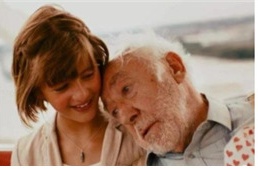 .
.
Learning Colour Words In the first few years of their lives, children brought up in English﹣speaking homes successfully master the use of hundreds of words, including those for objects, actions, emotions, and many other aspects of the physical world. However, when it comes to learning colour words, the same children perform very badly. If shown a blue cup and asked about its colour, typical two﹣year﹣olds seem as likely to come up with "red" as "blue". Cognitive (认知) scientists at Stanford University in California supposed that children's inability at colour﹣word learning may be directly linked to the way these words are used in English. They are used mostly in pre﹣nominal position (e.g. "blue cup"), in contrast to post﹣nominal position (e.g. "The cup is blue. "). The difficulty children have may simply come down to the challenge of having to make predictions from colour words to the objects they refer to, rather than from the objects to the colour words. To explore this idea further, the research team recruited (招募) 40 English children aged between 23 and 29 months and carried out a three﹣period experiment. It included a pre﹣test, followed by training in the use of colour words, and finally a post﹣test that was the same to the pre﹣test. The pre﹣ and post﹣ test materials contained six objects that were unfamiliar to the children. There were three examples of each object in each of three colours﹣red, yellow and blue.The objects were presented on trays (托盘), and in both tests, the children were asked to pick out objects in response to requests in which the colour word was either a pre﹣nominal ( "Which is the red one? ") or a post﹣nominal ( "Which one is red? "). In the training, the children were introduced to five sets of familiar items (balls, cups, crayons, glasses, and toy bears) in each of the three colours. Half the children were presented with the items one by one and heard them labeled with colour words used pre﹣nominally, while the other half were introduced to the same items described with a post﹣nominal colour word. After the training, the children repeated the selection task on the novel items in the post﹣test. Correct choices on items that were consistent (一致的)across the pre﹣and post﹣tests were used to measure children's colour knowledge. According to the assessment, children's performance was consistent when they were both trained and tested on post﹣nominal adjectives, and worst when trained on pre﹣nominal adjectives and tested on post﹣nominal adjectives. Comparing the pre﹣and post﹣test scores across each condition showed a significant decline in performance when children were both pre﹣and post﹣tested with questions that placed the colour words pre﹣nominally.
(1)What is the purpose of Paragraph 2?________
A. To present a phenomenon.
B. To make a contrast.
C. To give a possible explanation.
D. To provide an example..
(2)What can we learn about the experiment from the passage?________
A. The children had to place the pre﹣and post﹣test objects onto coloured trays.
B. The children were presented with the same objects in the pre﹣and post﹣tests.
C. Pre﹣nominal questions were less used than post﹣nominal questions in the training.
D. The researchers aimed to look for consistencies in children's knowledge of word order..
(3)The outcome of the experiment shows that________.
A. children are unable to accurately sort objects by colour
B. children trained on pre﹣nominal adjectives perform well
C. children learn colour words rapidly in post﹣nominal position
D. children can make predictions from the objects to the colour words.
Teens want structure in their lives, which means they want their lives well﹣planned. To begin building structure, teens need love and trust.They need to know their parents are there to give them needed love and support (支持).Teens want to be sure that nothing can prevent parents from shouldering their responsibility for them ﹣ not their growing maturity (成熟), misbehavior, nor anger at something they have done.Teens want parents to keep control while allowing them to make some decisions. There are some ways you can help your teens create reasonable structure and remain close.One way is to spend time together.Parents often mistake their teens' increased interest in friends for a disinterest in the family. Teens would like to spend more time doing things with their parents, but watching TV is not ________spending time together. As your teens mature, it is important for you and your teens spend time alone together, one to one. Your teens need time to talk to you alone without any other family member present. Talk with your teens about their interests and concerns. Make sure you really show interest in what is happening. When talking with your teens, give full attention and do not stop them. The way to help your teens become adults is to let your teens into your world. Sharing your emotions and concerns with your teens is important. Avoid causing needless worry. Trust your teens. Don't expect the worst. Hope for the best. Telling your teens you don't like their friends will cause the teens not to bring their friends home. If something should go wrong, believe that your teens didn't do it on purpose. It is very important that you treat your teens with respect. Teens need the same respect adults show for total strangers. Don't talk down to your teens. You need to be supportive o f your teens.What may be a small problem to you may be troubling to your teens. Teens don't have the experiences that adults have had.Let the teens know that you understand how much it hurts when something happens that is upsetting or hurtful to them. As they mature, they can look back at some problems they had and laugh at having been upset by something that now seems unimportant. The most important things to remember are: talk with your teens, listen to their worries and offer suggestions when needed. This will help your teens to live a well﹣organized life.
(1)According to Paragraph 1, teens________.
A. can control themselves.
B. expect direction and freedom.
C. don't know how to make decision
D. don't have responsibility for the family.
(2)The underline part "counted as" in Paragraph 3 probably means "________".
A. compared with B. used as C. connected with D. regarded as.
(3)To help teens organize their lives , parents should________.
A. invite their teens' friends home.
B. leave their teens' problems alone.
C. share their feelings with their teens.
D. pay little attention to their teens' daily lives..
(4)What is the best title of the passage ?________
A. Training Teens to Become Responsible Adults.
B. Helping Teens to Build Reasonable Structure.
C. Improving the Relationship with Your Teens.
D. Stepping into Your Teens' Secret Word.
.题目解答
答案
[答案]
B
B
A
[考点]
记叙文完形
细节理解题
记叙文阅读
.